

Academics
Faculties
Faculty of Law
| Department | Department of Law and Politics |
|---|---|
| Educational and Research Goals | The Faculty of Law aims to develop extensive knowledge and powers of judgment concerning law and politics, with the aim of nurturing human resources who can think and act independently and creatively, in flexible response to the complexity and the unceasing diversification that together characterize contemporary society. |
| Degree | Bachelor of Law |
Faculty of Letters
| Department | General Department of Humanities |
|---|---|
| Educational and Research Goals | The Faculty of Letters aims to conduct comprehensive and multidisciplinary education and research in the field of the humanities, in order to contribute to exploration and development of those humanities, as well as to provide future 21st-century citizens with a wide-ranging education and in-depth expertise. |
| Degree | Bachelor of Arts |
Faculty of Economics
| Department | Department of Economics |
|---|---|
| Educational and Research Goals | The Faculty of Economics aims to develop human resources who will actively contribute to solving both the international and the local problems in this globalized and information-technologized world by understanding underlying economic principles. |
| Degree | Bachelor of Economics |
Faculty of Business and Commerce
| Department | Department of Business and Commerce |
|---|---|
| Educational and Research Goals | The Faculty of Business and Commerce aims to develop business leaders who have flexible ideas, and do not only pursue profit, but also possess a broad view of and acute insight into business, together with a profound understanding of irreproachable business ethics and a sense of social responsibility. |
| Degree | Bachelor of Business and Commerce |
Faculty of Sociology
| Department | Department of Sociology |
|---|---|
| Educational and Research Goals | The Faculty of Sociology aims to develop human resources with expertise and interdisciplinary knowledge on human beings and society, as well as to educate students theoretically and empirically on sociology, psychology, media, journalism and communication studies, and social system design. |
| Degree | Bachelor of Sociology |
Faculty of Policy Studies
The Faculty of Policy Studies aims to impart interdisciplinary knowledge of a raft of academic fields, including among others international relations, politics, economics, business strategy, law, and regional cultures, in order to develop the ability to identify whatever problems may come to confront contemporary society, find feasible solutions, and implement those solutions.
| Department | Department of Policy Studies |
|---|---|
| Educational and Research Goals | The Department of Policy Studies aims to offer knowledge of the social sciences and the humanities relevant to the fields of the international community and Asian area studies, politics and policy, local communities and administration, and organization and management with the object of developing human resources who will establish policies effective in solving complex problems afflicting contemporary society. |
| Degree | Bachelor of Policy Studies |
| Department | Department of Global and Asian Policy Studies |
|---|---|
| Educational and Research Goals | The Department of Global and Asian Policy Studies aims to offer knowledge of public policies, legal policies, and societal matters concerning regions, states, and the international community, all of which have their own histories and cultures, in order to develop internationally- competent human resources. |
| Degree | Bachelor of Policy Studies |
Faculty of Foreign Language Studies
| Department | Department of Foreign Language Studies |
|---|---|
| Educational and Research Goals | The role of the Faculty of Foreign Language Studies is to develop "experts specializing in foreign languages" who will make useful contributions to both the activities of the international community as well as various areas of education, facilitated by a high level of competence in communication using foreign languages. |
| Degree | Bachelor of Arts in Foreign Language Studies |
Faculty of Health and Well-being
| Department | Department of Health and Wellbeing |
|---|---|
| Educational and Research Goals | The Faculty of Health and Well-being aims to offer education with an emphasis on both theoretical study and varied forms of practical training, concerning various health issues related to human life, and an interdisciplinary approach drawn from the humanities, the social sciences, and the natural sciences, in order to nurture human resources possessed of a comprehensive expertise with regard to humanity and its health. |
| Degree | Bachelor of Health and Well-being |
Faculty of Informatics
| Department | Department of Informatics |
|---|---|
| Educational and Research Goals | The Faculty of Informatics offers a broad curriculum concerning information theory and its significance, in order to clarify the relationship between information and human societies, with the aim of developing human resources capable of using information technology in order to identify needs and provide solutions. |
| Degree | Bachelor of Informatics |
Faculty of Societal Safety Sciences
| Department | Department of Safety Management |
|---|---|
| Educational and Research Goals | The Faculty of Societal Safety Sciences offers interdisciplinary and practical education and research activities, concerning various problems that threaten the security of contemporary society, and also aims to develop human resources possessed of broad views and excellent problem-solving skills, which such resources can deploy in order to contribute to increase in the safety and security of a given society. |
| Degree | Bachelor of Arts and Sciences |
Faculty of Business Data Science
| Department | Department of Business Data Science |
|---|---|
| Educational and Research Goals | The Faculty of Business Data Science is dedicated to cultivating professionals who drive innovation by recognizing and addressing challenges. Students are trained to leverage their business expertise, understand complex phenomena through data analysis, and possess knowledge of advanced technologies such as AI and data science. |
| Degree | Bachelor of Business Data Science |
Faculty of Engineering Science
By nurturing the skills and the logical reasoning indispensable to creation of sophisticated and reliable "mechanisms" and "devices" that may facilitate sustainable achievement of a quality of life that is both safe and first-rate, the Faculty of Engineering Science aims to develop competent human resources capable of contributing to industrial technologies and the better functioning of society.
| Department | Department of Mathematics |
|---|---|
| Educational and Research Goals | The Department of Mathematics aims to develop human resources capable of both using skills in both mathematical construction and logical reasoning in order to analyze and conceptualize various occurrences characterizing contemporary life and culture, and also of accurately deploying these skills with the object of arriving at solutions to a wide range of problems. |
| Degree | Bachelor of Science |
| Department | Department of Pure and Applied Physics |
|---|---|
| Educational and Research Goals | The Department of Pure and Applied Physics aims, by providing students with the opportunities to learn the fundamental areas of physics that are the basis of science and technology and acquire the experimental techniques and mathematical analysis methods, to foster individuals with creativity and the ability of scientific analysis and reasoning that can be applied in a wide range of fields. |
| Degree | Bachelor of Science |
| Department | Department of Mechanical Engineering |
|---|---|
| Educational and Research Goals | The Department of Mechanical Engineering aims to provide both understanding of the fundamental principles and knowledge of the applied technology relevant to the physical, energetic, and information-processing functions that are necessary to creating mechanical systems for society, and also to develop human resources capable of identifying, analyzing, and solving problems concerning those functions. |
| Degree | Bachelor of Engineering |
| Department | Department of Electrical, Electronic and Information Engineering |
|---|---|
| Educational and Research Goals | The Department of Electrical, Electronic and Information Engineering aims to develop expertise relating to both hardware- and software-technologies, bringing together essential elements from those fields of engineering―namely, electrical, electronic, information, and communication―that are indispensable to the functioning of contemporary society, and also to nurture human resources skilled in problem-identification, analysis, and generation of solutions. |
| Degree | Bachelor of Engineering |
| Department | Department of Green Electronics |
|---|---|
| Educational and Research Goals | The Department of Green Electronics aims to train professionals with strong logical thinking and practical skills through systematic study of semiconductor technologies essential to modern electronic devices, from environmentally conscious materials and processes to circuit design and applied systems. |
| Degree | Bachelor of Engineering |
Faculty of Environmental and Urban Engineering
The Faculty of Environmental and Urban Engineering aims to nurture richly creative human resources equipped with the knowledge of science and technology necessary to creating or revitalizing safe, secure, and environmentally-friendly urban areas within which local residents and industries can successfully and contentedly coexist.
| Department | Department of Architecture |
|---|---|
| Educational and Research Goals | The Department of Architecture offers studies related to building structure, such as earthquake resistance and durability; qualities of the built environment, such as heat, light, and sound; and planning, aesthetics, design, and architectural history, as well as technical studies, such as experiments, practical training, and design and drafting, in order to train architects, engineers, and researchers. |
| Degree | Bachelor of Engineering |
| Department | Department of Civil, Environmental and Applied Systems Engineering |
|---|---|
| Educational and Research Goals | The Department of Civil, Environmental and Applied Systems Engineering aims to offer the knowledge and techniques necessary to planning, designing, and maintaining urban systems from the perspectives of protection of the natural environment, information, and management, in order to create environmentally-balanced cities, and also aims to train engineers and researchers to lead urban development. |
| Degree | Bachelor of Engineering |
| Department | Department of Chemical, Energy and Environmental Engineering |
|---|---|
| Educational and Research Goals | By means of offering seminars and laboratory classes through which to impart fundamental knowledge relating to physical chemistry, chemical engineering, etc., and to the ability to identify the roots of problems, and then eradicate these, the Department of Chemical, Energy and Environmental Engineering aims to equip engineers and research-workers with an ability to generate engineering solutions to various energy and environmental problems. |
| Degree | Bachelor of Engineering |
Faculty of Chemistry, Materials and Bioengineering
The goals of the Faculty of Chemistry, Materials and Bioengineering are (1) to develop and create both science and technology that will enable "materials" and "life" successfully to coexist, (2) to nurture human resources who are equipped with those constructive manufacturing skills necessary to creating such new materials as may contribute to not only the greater wellbeing of humanity but also to protection of the natural environment, and (3) to launch manufacturing processes for physical substances.
| Department | Department of Chemistry and Materials Engineering |
|---|---|
| Educational and Research Goals | The Department of Chemistry and Materials Engineering aims to inculcate and develop knowledgeable expertise in the synthesis, inducement of reaction, production, and processing of molecules, polymers, materials, and biologically-relevant substances, and also a capacity to generate creatively, working from those scientific principles and technology that concern the structures and functions of such substances. |
| Degree | Bachelor of Engineering |
| Department | Department of Life Science and Biotechnology |
|---|---|
| Educational and Research Goals | The Department of Life Science and Biotechnology aims to develop human resources who can acquire the knowledge and skills necessary to understand life phenomena from various perspectives and to deal with various problems concerning life, the natural environment, medical care and foodstuffs. |
| Degree | Bachelor of Engineering |
Graduate Schools
Graduate School of Law
| Educational and Research Goals | The first two-year term of the Ph.D. program (Master’s program) in the Graduate School of Law aims to teach and study academic theories in the field of law and politics, as well as to develop human resources with rich expert knowledge and advanced research abilities in the field. |
|---|---|
| Degree | Master of Arts in Law |
| Educational and Research Goals | The second three-year term of the Ph.D. program in the Graduate School of Law aims to teach and study academic theories and applications in the field of law and politics, as well as to develop human resources with rich expert knowledge and outstanding research abilities to address current issues in the field. |
|---|---|
| Degree | Doctor of Philosophy in Law |
Graduate School of Letters
| Educational and Research Goals | The first two-year term of the Ph.D. program (Master’s program) in the Graduate School of Letters aims to conduct comprehensive and interdisciplinary education and research in the field of humanities to contribute to the exploration and development, as well as to develop researchers and highly-skilled professionals with rich academic knowledge and advanced research abilities. |
|---|---|
| Degree | Master of Arts in Letters |
| Educational and Research Goals | The second three-year term of the Ph.D. program in the Graduate School of Letters aims to conduct comprehensive and 2/98 interdisciplinary education and research in the field of humanities to contribute to the exploration and development of this discipline, as well as to develop researchers and highly-skilled professionals with rich academic knowledge, outstanding research abilities, and a high sense of professional ethics. |
|---|---|
| Degree | Doctor of Philosophy in Letters |
Graduate School of Economics
| Educational and Research Goals | The first two-year term of the Ph.D. program (Master’s program) in the Graduate School of Economics provides students with an ability to "think globally" as well as solid foundation in economics, thereby aiming to develop human resources who will conduct innovative research to advance our knowledge of the economy. |
|---|---|
| Degree | Master of Arts in Economics |
| Educational and Research Goals | The second three-year term of the Ph.D. program in the Graduate School of Economics aims to deepen research in specialized areas of economics to contribute to the advancement of research in these areas, as well as to develop human resources with an international perspective, rich and in-depth expert knowledge, and highly advanced research abilities. |
|---|---|
| Degree | Doctor of Philosophy in Economics |
Graduate School of Business and Commerce
| Educational and Research Goals | The first two-year term of the Ph.D. program (Master’s program) in the Graduate School of Business and Commerce aims to provide the students with theoretical and practical education and research activities in the field of business and commerce in order to further their academic expertise and research abilities, so that they may cope with contemporary issues by taking full advantage of their expert knowledge. |
|---|---|
| Degree | Master of Arts in Business and Commerce |
| Educational and Research Goals | The second three-year term of the Ph.D. program in the Graduate School of Business and Commerce aims to provide the students with theoretical and practical education and research activities in the field of business and commerce, and to thereby develop researchers who are equipped with rich knowledge, outstanding research abilities, and a high sense of professional ethics, and who are able to lead research in the field. |
|---|---|
| Degree | Doctor of Philosophy in Business and Commerce |
Graduate School of Sociology
| Educational and Research Goals | The first two-year term of the Ph.D. program (Master’s program) in the Graduate School of Sociology aims to research social sciences, human sciences, and the interdisciplinary area of these academic disciplines theoretically and empirically, as well as to develop human resources with advanced expert knowledge and research abilities and professionals with expertise. |
|---|---|
| Degree | Master of Arts in Sociology |
| Educational and Research Goals | The second three-year term of the Ph.D. program in the Graduate School of Sociology aims to research social sciences, human sciences, and the interdisciplinary area of these academic disciplines theoretically and empirically, as well as to develop researchers who are equipped with advanced expert knowledge and insights and able to independently conduct research activities, and professionals with advanced expertise. |
|---|---|
| Degree | Doctor of Philosophy in Sociology |
Graduate School of Informatics
| Educational and Research Goals | The first two-year term of the Ph.D. program (Master’s program) in the Graduate School of Informatics aims to contribute to the advancement of the information society with the outcome of theoretical and applied research and extensive education on informatics, and produce highly-skilled practitioners and researchers with advanced knowledge and research abilities. |
|---|---|
| Degree | Master of Arts in Informatics / Master of Science in Informatics |
| Educational and Research Goals | The second three-year term of the Ph.D. program in the Graduate School of Informatics aims to contribute to the advancement of the information society with the outcome of theoretical and applied research and extensive education on informatics, and produce highly-skilled practitioners and researchers with advanced knowledge, outstanding research abilities, and a deep sense of professional ethics. |
|---|---|
| Degree | Doctor of Informatics |
Graduate School of Science and Engineering
| Educational and Research Goals | The first two-year term of the Ph.D. program (Master’s program) in the Graduate School of Science and Engineering aims to conduct comprehensive and interdisciplinary education and research activities in the field of science and engineering and cultivate creative advanced engineers and professionals by coping with the social needs of developing highly-skilled professionals, as well as to foster human resources who respond to rapidly-evolving science and technology. |
|---|---|
| Degree | Master of Science / Master of Engineering |
| Educational and Research Goals | The second three-year term of the Ph.D. program in the Graduate School of Science and Engineering aims to conduct comprehensive and interdisciplinary education and research activities in the field of science and engineering and cultivate researchers and highly-skilled professionals with advanced academic knowledge, outstanding research abilities, and a high sense of professional ethics, in order to meet the social needs of developing human resources who can respond to rapidly-evolving cutting-edge science and technology. |
|---|---|
| Degree | Doctor of Science/ Doctor of Engineering |
Graduate School of Foreign Language Education and Research
| Educational and Research Goals | The first two-year term of the Ph.D. program (Master’s program) in the Graduate School of Foreign Language Education and Research aims to contribute to the exploration and development of the academic field of foreign language education through the conducting of theoretical and practical education and research activities. It further aims to provide an environment which nurtures advanced-level professionals in the area of foreign language education. |
|---|---|
| Degree | Master of Arts in Foreign Language Education and Research |
| Educational and Research Goals | The second three-year term of the Ph.D. program in the Graduate School of Foreign Language Education and Research aims to contribute to the exploration and development of the field of foreign language education through theoretical and practical education and research, as well as to develop researchers and leaders with in-depth academic knowledge, advanced expertise, and outstanding research abilities. |
|---|---|
| Degree | Doctor of Philosophy in Foreign Language Education and Research |
Graduate School of Psychology
| Educational and Research Goals | The first two-year term of the Ph.D. program (Master’s program) in the Graduate School of Psychology aims to conduct comprehensive and interdisciplinary education and research of human mind and behavior, for training future researchers and highly-skilled professionals with rich academic knowledge and advanced research ability who conduct research on or provide appropriate treatment for various psychological issues existing in the diverse and complex society. |
|---|---|
| Degree | Master of Psychology |
| Educational and Research Goals | The second three-year term of the Ph.D. program in the Graduate School of Psychology aims to conduct comprehensive and interdisciplinary education and research on the human mind, which is the basis of all types of human behavior, for training future researchers and highly-skilled professionals to enable them to acquire rich academic knowledge, outstanding research abilities, and a high sense of professional ethics so that they will be able to conduct research on or provide appropriate treatment for various psychological issues existing in a diverse and complex society. |
|---|---|
| Degree | Doctor of Philosophy in Psychology |
Graduate School of Societal Safety Sciences
| Educational and Research Goals | The first two-year term of the Ph.D. program (Master’s program) in the Graduate School of Societal Safety Sciences aims to establish the academic field of social safety studies through cross-sectional and interdisciplinary research for realization of a society resistant to ever-changing natural and social disasters, as well as to foster human resources who contribute to disaster prevention and reduction. |
|---|---|
| Degree | Master of Arts and Sciences |
| Educational and Research Goals | The second three-year term of the Ph.D. program in the Graduate School of Societal Safety Sciences aims to establish the academic field of social safety studies through cross-sectional and interdisciplinary research for realization of a society resistant to ever-changing natural and social disasters, as well as to develop human resources who are able to make outstanding contributions to disaster prevention and reduction. |
|---|---|
| Degree | Doctor of Philosophy |
Graduate School of East Asian Cultures
| Educational and Research Goals | The first two-year term of the Ph.D. program (Master’s program) in the Graduate School of East Asian Cultures aims to conduct comprehensive and interdisciplinary education and research activities to understand the formation, development and correlation of East Asian cultures for fostering of researchers and highly-skilled professionals with rich expert knowledge and advanced research abilities. |
|---|---|
| Degree | Master of Arts in Cultural Interaction |
| Educational and Research Goals | The second three-year term of the Ph.D. program in the Graduate School of East Asian Cultures aims to conduct comprehensive and interdisciplinary education and research activities to understand the formation, development and correlation of East Asian cultures, as well as to produce researchers and highly-skilled professionals with rich expert knowledge, outstanding research abilities, and a high sense of professional ethics. |
|---|---|
| Degree | Doctor of Philosophy in Cultural Interaction |
Graduate School of Governance
| Educational and Research Goals | The first two-year term of the Ph.D. program (Master’s program) in the Graduate School of Governance aims to conduct comprehensive and interdisciplinary education and research activities in the field of social science for fostering of highly-skilled professionals and researchers with a high ethical sense who implement policies developed by themselves by taking full advantage of internationally-compatible problem finding skills, policymaking ability and capability to evaluate policies. |
|---|---|
| Degree | Master of Policy Studies |
| Educational and Research Goals | The second three-year term of the Ph.D. program in the Graduate School of Governance aims to conduct comprehensive and interdisciplinary education and research activities in the field of social science for producing highly-skilled professionals with a high ethical sense and internationally-compatible rich academic knowledge and outstanding research abilities such as a problem-finding ability and an ability to design, evaluate and implement policies, and researchers who are autonomous and able to make contributions to academic development. |
|---|---|
| Degree | Doctor of Policy Studies |
Graduate School of Health and Well-being
| Educational and Research Goals | The first two-year term of the Ph.D. program (Master’s program) in the Graduate School of Health and Well-being aims to conduct education and research activities with a focus on theoretical studies and practical training on various problems of human health and well-being based on an interdisciplinary approach from humanities, social sciences and natural sciences for fostering of researchers and highly-skilled professionals with rich academic knowledge and advanced research abilities. |
|---|---|
| Degree | Master of Health and Well-being |
| Educational and Research Goals | The second three-year term of the Ph.D. program in the Graduate School of Health and Well-being aims to conduct education and research activities with a focus on theoretical studies and practical training on various problems of human health and well-being based on interdisciplinary approaches involving the humanities, social sciences and natural sciences, as well as to develop researchers and highly-skilled professionals with rich academic knowledge, outstanding research abilities, and a high sense of professional ethics. |
|---|---|
| Degree | Doctor of Health and Well-being |
School of Law
| Educational and Research Goals | The objective of the School of Law is to provide advanced professional legal education that bridges the gap between theory and practice in order to cultivate the basic qualities required by legal professionals and train creative professionals equipped with high professional ethics and a strong sense of social justice personalities. |
|---|---|
| Degree | Juris Doctor |
School of Accountancy
| Educational and Research Goals | The objective of the School of Accountancy is to provide advanced professional education that organically links theory and practice in order to equip students with a deep level of scholarship and practical abilities, thereby developing capable certified public accountants and other advanced accounting professionals. |
|---|---|
| Degree | Master of Business Administration in Accountancy |
Japanese Language and Culture Program Preparatory Course (Bekka)
In April 2012, we launched Minami-Senri International Plaza as part of an international initiative at Kansai University, which includes a Japanese Language and Culture Program Preparatory Course. (Bekka)
The purpose of this course is to provide instruction in the Japanese language and culture as well as general Japan studies to international students who intend to proceed to the next stage of education as a student at Kansai University, or at other Japanese universities.
ICT (Information and Communication Technology) is the core of Bekka education, and we offer extensive learning opportunities with e-learning inside and outside the classroom. Students will develop information literacy skills as well as Japanese language proficiency.
Japanese Language and Culture Program Preparatory Course(Bekka)
Annex Schools
-
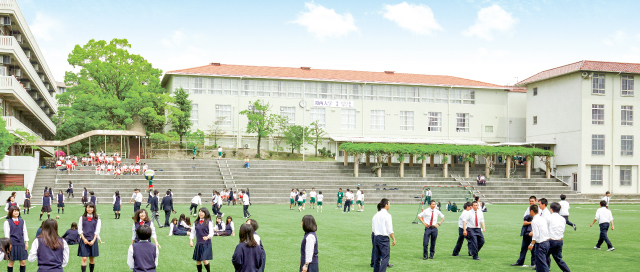
Kansai University
Dai-ichi Senior High School3-3-24 Yamate-cho, Suita-shi, Osaka
564-0073
Tel: +81-6-6337-7750 -
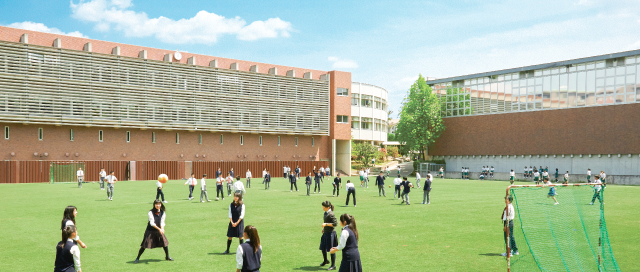
Kansai University
Dai-ichi Junior High School3-3-24 Yamate-cho, Suita-shi, Osaka
564-0073
Tel: +81-6-6337-7750 -
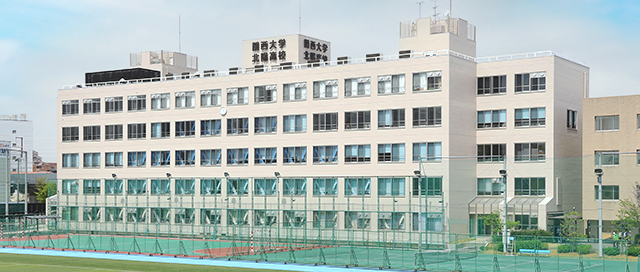
Kansai University
Hokuyo Senior High School1-3-26 Kamishinjo, Higashiyodogawa-ku, Osaka-shi, Osaka
533-0006
Tel: +81-6-6328-5964 -
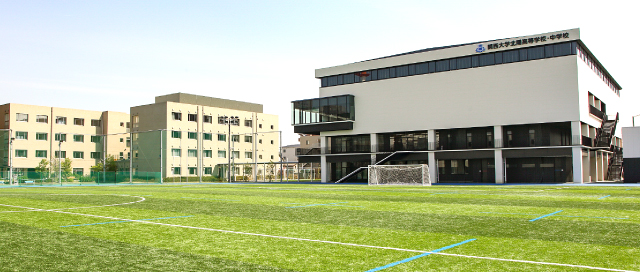
Kansai University
Hokuyo Junior High School1-3-26 Kamishinjo, Higashiyodogawa-ku, Osaka-shi, Osaka
533-0006
Tel: +81-6-6328-5964 -
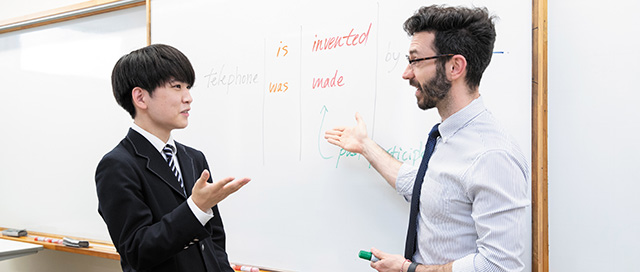
Kansai University
Senior High School7-1 Hakubai-cho, Takatsuki-shi, Osaka
569-1098
Tel: +81-72-684-4327 -

Kansai University
Junior High School7-1 Hakubai-cho, Takatsuki-shi, Osaka
569-1098
Tel: +81-72-684-4326 -

Kansai University
Elementary School7-1 Hakubai-cho, Takatsuki-shi, Osaka
569-1098
Tel: +81-72-684-4312 -
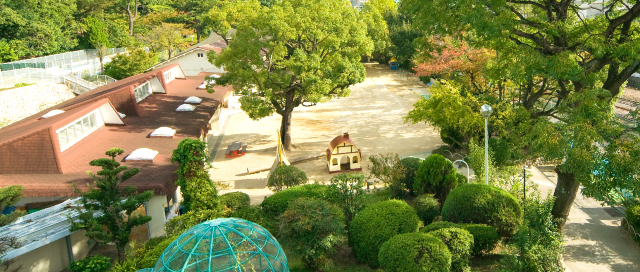
Kansai University
Kindergarten3-5-34 Yamate-cho, Suita-shi, Osaka
564-0073
Tel: +81-6-6387-3752
- TOP
- Academics