

Philosophy and Concept
To live with peace of mind and spiritual richness, we must sustainably develop safe and functional urban spaces.
Cities that continuously create new value through the high-density accumulation of people, goods, and information must be sophisticated human environments that coexist with the natural environment. The goal of engineers involved in cities is to advance 21st-century "community building" with industrial and social systems that harmonize with the global environment.
The Faculty of Environmental and Urban Engineering is a faculty that constructs and researches new comprehensive science and technology, with keywords such as environment, urban design, architecture, infrastructure, information, resources, energy, and environmental chemical processes, to create and regenerate more comfortable future cities. Why not take on the challenge of new "community building" as a person who will live in the future?
What You Can Do at the Faculty of Environmental and Urban Engineering
Designing Livable "Communities" Where People, Nature, and Cities Harmonize
The Faculty of Environmental and Urban Engineering aims to cultivate human resources who create sustainable and comfortable future cities!
Urban Design
Create functional, safe, and beautiful living and urban spaces. Design comfortable cities in harmony with the natural environment.
Disaster Prevention & Safety
Plan and design disaster-resistant, safe, and comfortable cities. Learn infrastructure maintenance and management technologies.
Environmental Conservation
Build sustainable urban systems in harmony with the global environment. Develop technologies to reduce environmental burden.
Energy
Reduce environmental burden through energy conservation and new energy development. Solve resource and energy problems with chemical engineering.
Technologies for Designing Livable "Communities"
Urban Infrastructure Design
Learn the knowledge necessary to design, construct, and maintain infrastructure facilities such as roads, bridges, tunnels, water and sewage systems, rivers, and ports. Master methods to design infrastructure facilities and structures by comprehensively judging natural conditions, social conditions, and environmental conditions.
Social System Planning
Learn methods to adapt to population decline and global environmental changes and sustainably develop urban society. Master methods to comprehensively formulate plans by incorporating citizens' needs and opinions, and efficiently manage and operate systems supporting society such as disaster prevention, transportation, communication, and production/distribution.
Environmental Symbiosis Technology
To create sustainable urban spaces in harmony with the natural environment, learn the knowledge and technologies necessary to plan, design, and maintain urban systems based on a unified perspective that includes environment, information, and management.
Urban Management
Learn technologies to reconsider cities as social systems from a broad perspective, and plan, design, and manage/operate those systems based on the organization of various information. Also utilize data science and ICT technologies.
Chemical Engineering to Solve Energy and Environmental Problems
Realize energy conservation, new energies such as biomass and hydrogen, environmental remediation, and pollution prevention through chemical engineering.
Effective Resource Utilization
Learn technologies for more effective use of energy from petroleum and coal, technologies for chemical conversion of natural gas, and other technologies for effective utilization of limited resources. We also research urban mining recycling technology that produced medals for the Tokyo Olympics.
Clean Energy Development
We work on clean energy development such as "biomass" that reuses waste materials like wood chips and food waste to create energy, and "hydrogen" that does not pollute the environment during power generation and combustion. Create environmentally friendly future energy.
Efficient Energy Utilization
We consider efficient heat utilization methods, such as "cogeneration" that uses the thermal energy of fuel to operate power generation systems and uses the exhaust heat to boil water. We also research innovative energy-saving technologies such as microwave heating technology.
Environmental Purification Technology
To solve environmental problems such as global warming, learn technologies that do not emit pollutants and technologies that remove and detoxify already emitted pollutants. Research methods such as water purification treatment using ozone and photocatalysts, and collecting pollutant particles from the atmosphere using nanotechnology.
What is Chemical Engineering?
Comprehensive engineering dealing with "Materials," "Energy," "Machinery," "Information," and "Processes"
Chemical engineering is based on theories and technologies for designing, operating, and constructing various production equipment and production processes that are collections of equipment, by quantitatively capturing phenomena and operations. Specifically, it is composed as an academic field based on physical chemistry, reaction engineering, separation engineering, transport phenomena, heat transfer engineering, fluid engineering, process design and control, equipment design, and others.
Chemical engineering emerged in the twentieth century along with petroleum refining and petrochemical industries. Subsequently, its application range expanded to textiles, steel and non-ferrous metals, food, pharmaceuticals, electronics, and many other manufacturing processes. At the same time, it has progressed toward contributions to pollution and environmental problems, and fusion with biotechnology and nanotechnology.
Contributing to Society Through the Power of Chemical Engineering
Chemical engineers who have mastered chemical engineering acquire the ability to solve a wide range of issues from nano-scale phenomena to the global environment, and contribute to society in a wide variety of industries. It is a powerful tool that can contribute to reducing environmental burden, such as energy reduction, carbon dioxide emission suppression, waste reduction, resource recycling, and purification of contaminated water and soil, toward solving energy and environmental problems.
Department Introduction

Department of Architecture
Capacity: 105 students
Learn structure, human psychology, and aesthetic sense in a balanced way, and work on creating better living environments and urban spaces.
Learn More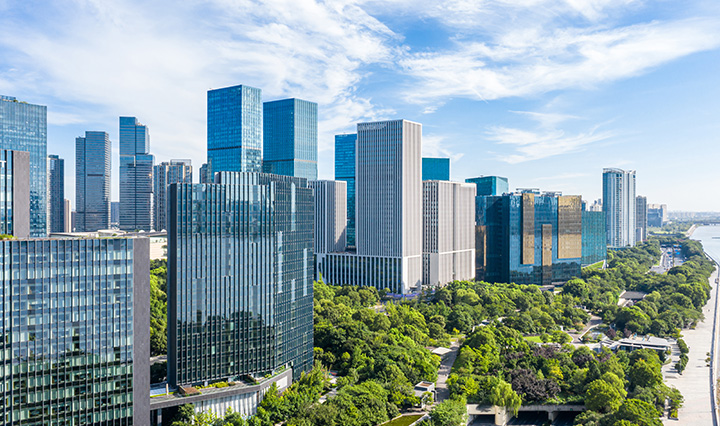
Department of Urban System Engineering
Capacity: 132 students
Solve urban disaster prevention, environmental, and transportation problems to create safe, secure, and comfortable future cities. Master the knowledge and technologies necessary to plan, design, and maintain urban systems based on a unified perspective that includes environment, information, and management to create sustainable cities in harmony with the natural environment.
Urban Infrastructure Design Course: Aim to become engineers who can functionally design, construct, and maintain urban infrastructure to create beautiful and safer cities.
Social System Planning Course: Aim to become engineers who can comprehensively plan social systems and conduct planning, development, and management to make diverse societies smoother and more comfortable.
Department of Energy and Environmental Engineering
Capacity: 80 students
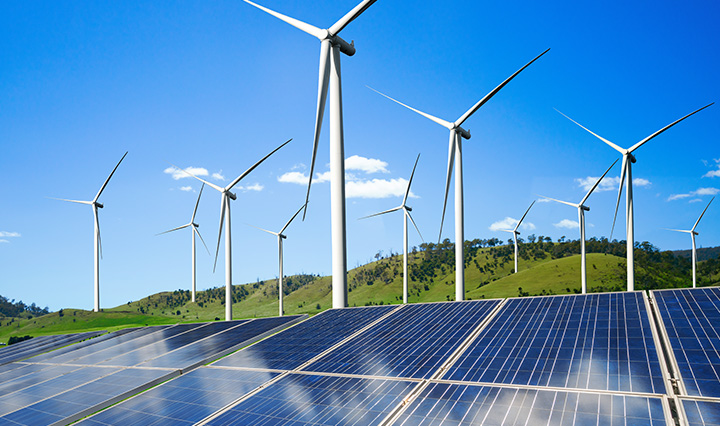
Solve energy and environmental issues through chemical engineering. Cultivate human resources who can build new systems with low environmental burden by learning subjects centered on "Chemical Engineering" while keeping in mind energy conservation, new energies such as biomass and hydrogen, environmental remediation, and pollution prevention.
From the first year, many experiments and exercises are assigned to cultivate human resources who can build new systems with low environmental burden by utilizing practical knowledge and technologies acquired. Chemical engineering is recognized as a powerful tool for solving energy and environmental problems.
Expected Future Career Fields
Department of Urban System Engineering (Capacity: 132 students)
Urban Infrastructure Design Course
- Government Agencies
- General Construction Industry
- Construction Consultants
- Bridge Manufacturers
- Railway and Highway Companies
- Plant Engineering
- Resource and Energy Industries
Social System Planning Course
- Government Agencies
- Urban Planning Consultants
- Think Tanks
- Urban Development
- Transportation
- Manufacturing
- IT
- Corporate Information Systems
Department of Energy and Environmental Engineering (Capacity: 80 students)
- Petroleum and Chemical Plants
- Energy Industry
- Environmental Companies
- Manufacturing (Food, Pharmaceuticals, Textiles, Steel)
- Electronics
- Environmental Consultants
- Public Research Institutions
- Graduate School Advancement, University Researchers