- 2025年度
- 2024年度
- 2023年度
- 2022年度
- 2021年度
- 2020年度
- 2019年度
- 2018年度
- 2017年度
- 2016年度
- 2015年度
- 2014年度
- 2013年度
- 2012年度
- 2011年度
- 2010年度
- 2009年度
2nd CRA Disaster and Emergency Management Conference in Bangkok: Field Work by Pierre welcomed by Chayanee
Field Work in Thailand by Pierre(PDM candidate) welcomed by Chayanee(the 2nd PDM holder) !
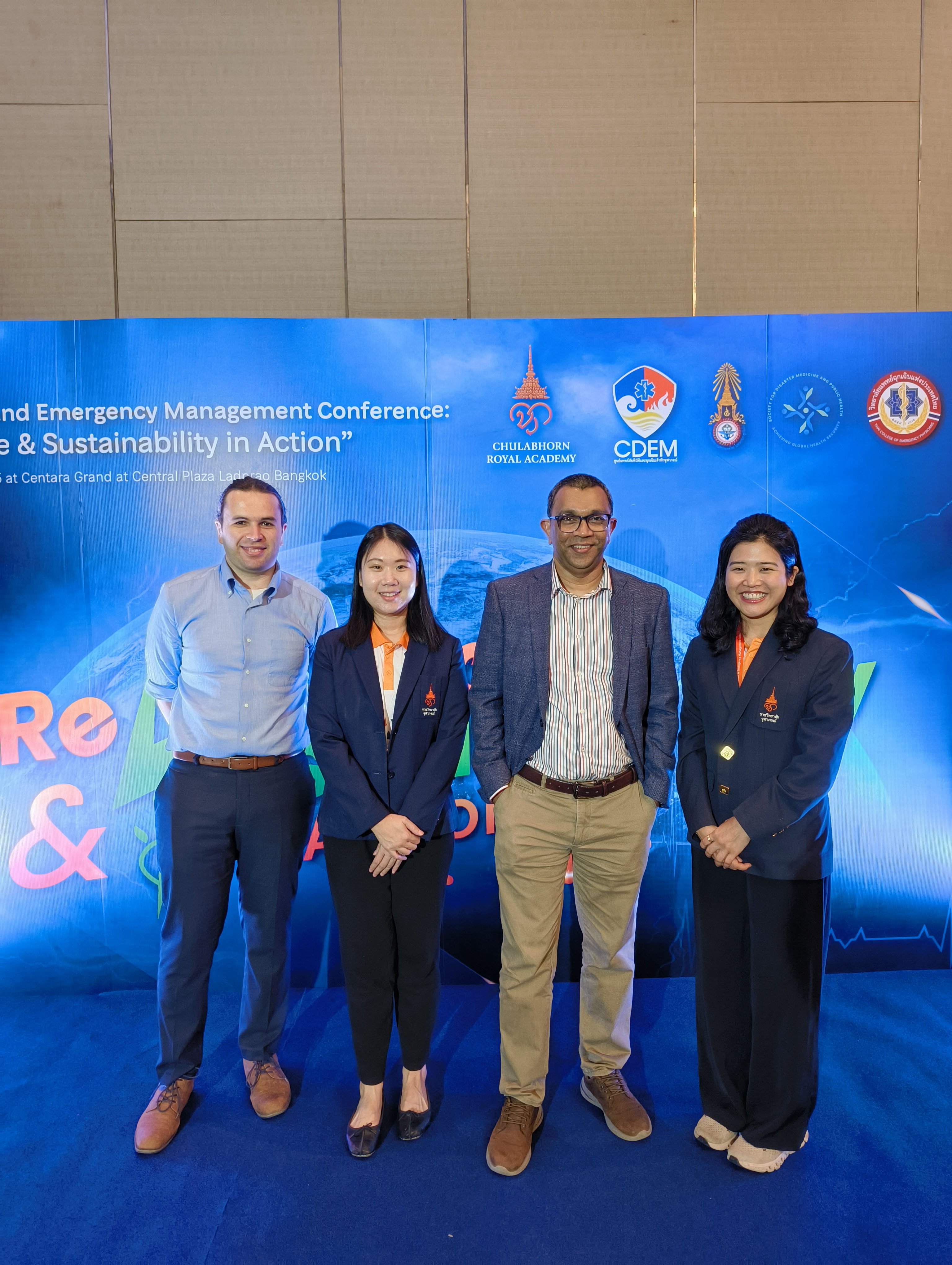
Pierre-Samy Jallal, PDM candidate from France carried out his field wrok in Thailand in August 2025. Pierre is the very first student from Europe for Graduate School of Societal Safety Sciences. And Chayanee Wongsuriyannan, the 2nd PDM holder welcomed Pierre for the occasion of 2nd CRA Disaster and Emergency Management Conference organised by Chulabhorn Royal Academy where she is working.
Let's see the detail of this great opportunity for the promotion of PDM by reading Pierre's precise report.
English Report by Pierre
06/08/2025
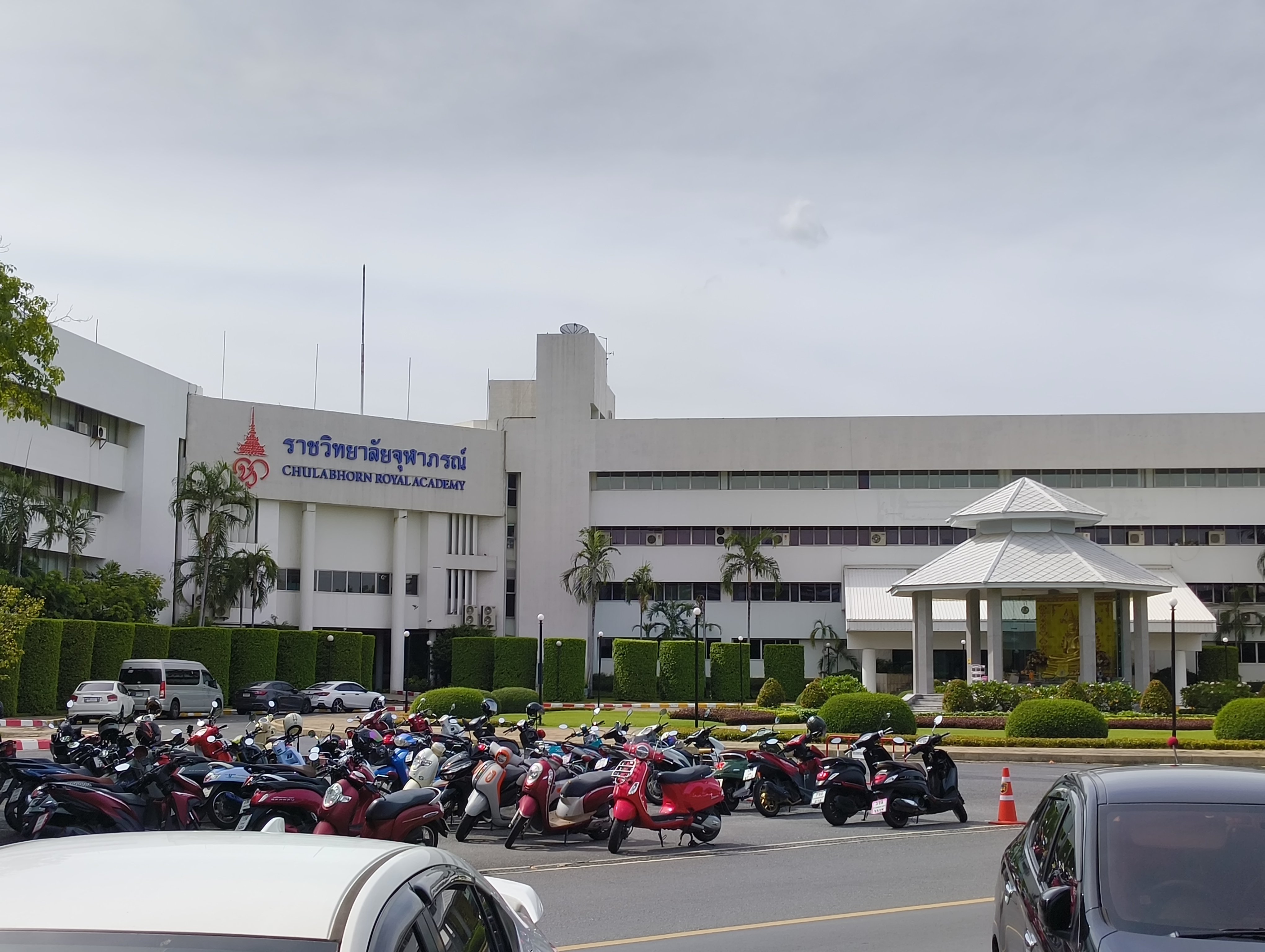
On the day of the 06th, Chayanee took me to visit her university. We took a tour of the Chulabhorn Royal Academy.
The academy is located in a district dedicated to the administrative building and enjoys a very pleasant environment, even if it is relatively far from the centre of Bangkok.
07/08/2025
First day of the "2nd CRA Disaster and Emergency Management Conference", I was able to attend all the speeches, and here's a brief presentation of them:
-Keynote: Disaster-ready Health Systems: Integrating DRR into National Health Policy by Dr. Shinichi Egawa from Tohoku University.
The main hypothesis of this presentation was: "A community with high life expectancy have a high resilience", the link between "informal risk" and "Life expectancy".
Other points were made during the presentation;
● The damage caused to hospitals and related systems during the 2011 tsunami and the consequences that ensued
● The importance of reducing post-disaster deaths
● Increased rainfall and risk of flooding, given that a significant percentage of Japan's Disaster Base Hospitals are located in flood-prone areas.
● Archproject and the ASEAN conference in Thailand next November
The professor used the "slido.com" software to involve the audience and make the presentation more interactive. It was really very interesting.
-Disaster-Ready Health Systems: Integrating DRR into National Health Policy by Pompitak Panla
The presentation focused on the ASEAN Agreement on Disaster Management Emergency Response (AADMER) and the recommendations of the Sendai Framework that Thailand wishes to follow.
-Special Session: Crowd disasters by Dr. Edbert Hsu
A special presentation on crowd disasters. The speaker gave a presentation on the risks of crowd movement and a review of the main disasters linked to crowd movement.
-Keynote: Situation awareness for the public health emergencies by Dr. Stephen S. Morse
the main points:
● definition of "Situation Awarness"
● Better visualisation but communication problems persist
● Presentation ProMED-mail
● Focus on early detection of disaster
-Panel Discussion: Strategies to align With the Sendai Framework
Brief presentation of the Sendai Framework and its objectives. Review of mid-term reports. Case study of Camp Mystic in Texas and Katrina>.
We need to improve communication with policy makers.
I've been waiting for this presentation, so I recorded it.
-Bridging Divides: Health System Resilience in border setting
Presentation on the importance of border management, particularly in areas with a high influx of refugees.
The following presentations are mainly dedicated to the cooperation between Civil and Military organisations with globally the same information. The presentations are the following:
-Strengthening Interoperability: Lessons from Joint Exercises & Complex Deployment
-Next-Generation Civil-Military Preparedness in Poland: Innovation, Technology and Coordination in Disaster Response.
-Panel discussion: Civilian-Military Unity in Action: Building Seamless Preparedness for Next Crisis
These presentations were followed by two more
-From Data to Action: Digital Tools Driving Disaster Resilience
I have recorded this presentation.
-The A. Frederick "Skip" Burkle Lecture
A presentation of the character and his main contributions to humanitarian aid and disaster management.
Report in French by Pierre
06/08/2025
Pendant la journée du 06, Chayanee m'a emmenée visiter son université. Nous avons fait un tour de la Chulabhorn Royal Academy.
L'académie est située dans un quartier dédié au bâtiment administratif et profite d'un environnement très agréable, même si elle est relativement éloignée du centre ville de Bangkok.
07/08/2025
Premier jour du "2nd CRA Disaster and Emergency Management Conference", j'ai pu assister à toutes les interventions, et voila une bref présentation de ces dernières:
-Keynote: Disaster-ready Health Systems : Integrating DRR into National Health Policy par le Dr. Shinichi Egawa de la Tohoku University.
La principale hypothèse de cette présentation était: "A community with high life expectancy have a high resilience", le lien entre "inform risk" et les "Life expectancy".
D'autres points on été exposé pendant cette présentation;
● Les dégâts causés au hôpitaux et aux système attenant pendant le tsunami de 2011 et les conséquences en ayant découlé
● l'importance de réduire les décès post catastrophes
● Augmentation des pluie et des risques d'inondation sachant qu'un pourcentage non négligeable des "Disaster Base Hospital" au Japon se trouve dans des zones inondable
● Archproject et la conférence ASEAN en thaïlande en novembre prochain
Le professeur à utilise le logiciel "slido.com" pour faire participer l'assistance et rendre la présentation plus interactive c'était vraiment très intéressant.
-Disaster-Ready Health Systems: Integrating DRR into National Health Policy par Pompitak Panla
La présentation s'est focalisée sur l'"Agreement on Disaster Management Emergency Response" (AADMER) de l'ASEAN et sur les recommandations du Cadre de Sendai que la Thaïlande souhaite suivre.
-Special Session: Crowd disasters par le Dr. Edbert Hsu
une présentation spéciale des catastrophes liées au mouvement de foules. L'intervenant à fait une présentation des risques de mouvement de foules et une revue des principales catastrophes liées au mouvement de foule.
-Keynote: Situation awarness for the public health emergencies par le Dr. Stephen S. Morse
les principaux points:
● définition des "Situation Awarness"
● Meilleur visualisation mais des problèmes de communication qui persiste
● Presentation ProMED-mail
● Focus on early detection of disaster
-Panel Discussion: Strategies to align With the Sendai Framework
Présentation succincte du cadre de Sendai et de ses objectifs. Évocation des rapport de mi parcours. Cas pratique avec les événements de Camp Mystic au Texas et Katrina>
Il faut améliorer la communication avec les policy makers.
J'attendais cette présentation du coup je l'ai enregistrée .
-Bridging Divides: Health System Resilience in border setting
Présentation sur l'importance de la gestion des frontières principalement dans des zones avec de fort afflux de réfugié.
Les présentations suivantes sont essentiellement dédiées à la coopération entre les organisations Civil et Militaire avec globalement les mêmes informations. les présentations sont les suivantes:
-Strengthening Interoperability: Lessons from Joint Exercices & Complex Deployement
-Next-Generation Civil-Military Preparedness in Poland: Innovation, Technology and Coordination in Disaster Response.
-Panel discussion: Civilian-Military Unity in Action: Building Seamless Preparedness for Next Crisis
Après ces presentation on à finit avec deux présentations
-From Data to Action: Digital Tools Driving Disaster Resilience
j' ai enregistré cette présentation.
-The A. Frederick "Skip" Burkle Lecture
Une présentation du personnage et de ses principales apport à l'aide humanitaire et le gestion des catastrophes